

Impact study - liberation
Liberation: Owned by smallholders, working for smallholder trade justice
Established in 2005 as The Ethical Nut Company by Twin – fair trade charity and founder of Cafèdirect and Divine – Liberation is the first farmer-owned ethical nut business worldwide and remains the UK’s only Fairtrade nut enterprise co-owned by the farmers it serves.
Renamed ‘Liberation Foods CIC’ in 2007 when the company bought itself out from Twin, Liberation sells products in stores such as The Co-op, Sainsbury’s and Tesco, sourced from smallholder farming communities. Liberation pays producers the highest price possible for raw materials, offering farmers, on average 36% above the combined Fairtrade minimum price and Premium. Meanwhile, its work with co-operatives to strengthen economic resilience, environmental sustainability and market access, has benefited over 35,000 farmers.
Liberation’s unique farmer co-ownership model and commitment to ethical sourcing practices position it as a leader in fair trade, and reflects their mission to resolve some of the trade injustices faced by smallholders in the Global South.
50% of its shares are held by the International Nut Co-operative (INC), a producer network collaborating to strengthen capacity, exchange technical knowledge and enhance trade opportunities for its members. The INC represents small-scale farmers and indigenous workers in South America, Central America, Asia and Africa.
Speaking about the significance of the INC’s majority shareholding in Liberation, Juan Bravo, President of Nicaraguan co-op Del Campo, said:
“I think it's a great opportunity for small producers. It’s the first time in history that small producers are owners of their own businesses in Europe. And I believe that it is a great victory that has cost lots of work, lots of time, lots of effort…”
Against this backdrop, the wider nut industry has remained largely unjust for small-scale farmers.
Liberation Managing Director, Dan Binks, said:
“Alone, [smallholders] just cannot compete with massive, commercial farms … that’s where Liberation and the co-operative model steps in … I’ve managed to build personal trust with farm organisations by being there [and] collaborating on projects, on difficulties, on anything.”
As a result of its close relationships with producer organisations, Liberation was able to deliver an uninterrupted supply to fulfil buyer commitments during the pandemic.
Dan said:
“We serviced all of our customers 100% during COVID times … where our competitors were actually going off-shelf and out of stock, we were able to maintain it [because] we own the relationships with farmer organisations [and] we work through the situation together.”
Our financial support has enabled Liberation to address its complex and evolving needs.
In 2007, we provided USD 600k in Buyer Credit, to help Liberation pay producers up front and support its growth during a period of investment in staff, office space, marketing and promotion. In 2008, Liberation required additional capital to support business planning and contingency, and their facility increased to USD 1.1m.
In 2010, Liberation faced barriers to growth. To enable purchasing from producers and fulfil large seasonal orders with major supermarkets, we increased Liberation’s credit facility to USD 1.95m for six months, over three consecutive years.
In 2017, Brexit and a weakening sterling escalated the cost of raw materials. Meanwhile, Liberation needed to purchase additional Brazil nuts to meet year-round contracts and new Christmas orders with Tesco. To facilitate procurement, we increased their facility to USD 1.5m for 12 months.
In 2022, prices increased throughout the supply chain as the sector grappled with the impacts of COVID. Speaking about this time, Dan said:
“For Liberation, that meant higher raw material, storage, manufacturing and distribution costs. Although market conditions were low, we were determined to support our farmer networks with higher prices for their raw materials.”
“We do about USD 2.5m of raw material purchases every year. We've got a credit line with Shared Interest of USD 1.1m. We utilise that credit line for trade finance to send pre-finance to farmers … And the advantage of that is the farmer organisation gets money when they need it [and] the co-operative gets the money that they need to buy the crop. It all eases their cash flow.”
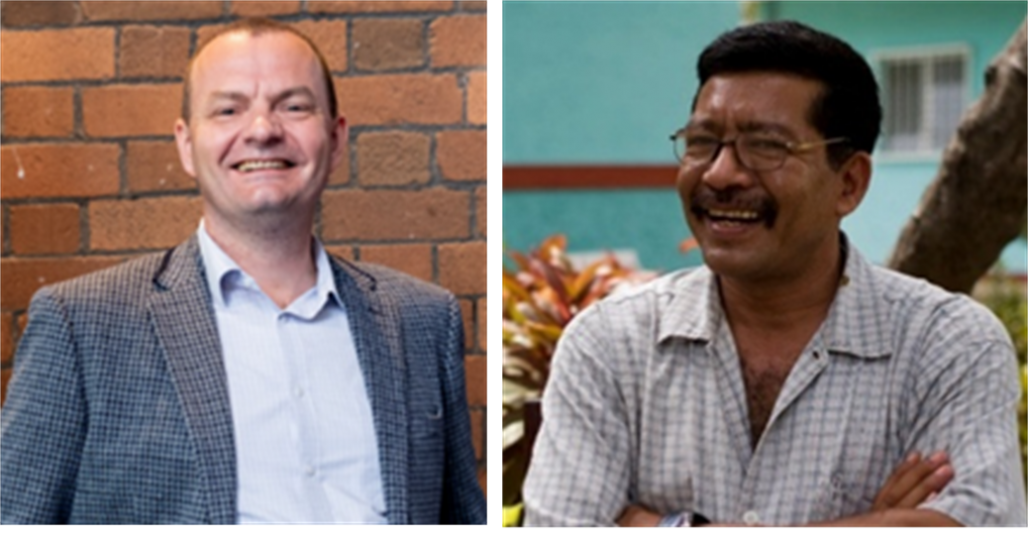
Image: Dan Binks (left) Juan Bravo (right).
Speaking about the impact of the prices he receives for his crops from Liberation, Julian Perez Ortiz, President of COINACAPA, a Brazil nut co-operative in Beni, Bolivia, said:
“Being part of Liberation brings a sense of empowerment and equality of opportunity. It’s this opportunity that helps liberate not just our livelihoods but also our children’s... One of my children now attends university, which would have been impossible ten years ago.
“The premium we get paid has helped to improve housing for many gatherer families ... We have also used Premium funds to improve the quality of our produce and the efficiency with which we deliver it.”
In Bolivia, co-operatives such as COINACAPA are responsible for preserving more than 100,000 hectares of Amazon rainforest, with the Brazil nut industry’s existence uniquely dependent on tree conservation.
Julian said:
“As long as small-scale nut gatherers make a good living, we keep the cattle-ranchers off our precious patch of rainforest – doing our bit to preserve the precious environment in which we live.”
Without Liberation’s above-market price plus the guaranteed fair price which comes with Fairtrade, gatherers would often resort to earning extra income by cutting down precious timber. Brazil nut farmers also face a complex supply chain, acutely affected by fluctuations in weather and inflation.
To address these challenges, Liberation has invested in training for Bolivian co-operatives to strengthen governance, improve best practices, raise understanding of the market and develop tools for communication, planning and controlling business processes.
Within this initiative, Liberation demonstrated how producers’ nuts were packaged and purchased in the UK – something many had never seen before. Liberation welcomed improvements in the quality, quantity and timeliness of supply and reporting, demonstrating the value of bilateral transparency as a means to foster responsiveness, reliability, morale, and economic resilience. Despite the economic importance of groundnuts in Malawi, aflatoxin outbreaks in the 70s and 80s were insufficiently managed by supply chain actors, and Africa’s share of the global groundnut market fell from 70% in 1970 to 5% in 2005.
In 2016, Liberation partnered with Twin Trading and the Mchinji Area Smallholder Farmers Association, a groundnut co-operative with 2,700 members, to introduce shelling in a controlled, mechanised environment. This reduced the risk of aflatoxin contamination, enabling nut aggregation and value addition.
Liberation continued to provide business, marketing and agricultural extension support to Malawian smallholders in 2018, with farmers trained in agricultural practices and post-harvest handling, improving both product quality and market prices.
Since 2010, Liberation has procured more than 1,000 tonnes of cashews from Fair Trade Alliance Kerala (FTAK), a farmer-led network in India.
Working with Liberation, FTAK has conducted initiatives to improve market access for its 4,500 members, advocate for farmers’ rights and build resilience within India’s rural farming communities.
In 2023, Liberation sourced its first retail-ready, origin-packed product directly from Keralan farmers, ensuring they received better margins. With FTAK, Liberation also launched a programme providing support for remote farmers with interest-free loans to bring immediate relief to families, meet housing, livestock and education costs and invest in crops.
The significance of these milestones is amplified by the context of India’s agrarian crisis, in which land degraded and government support diminished, leading to farmer indebtedness and suicides.
Tomy Mathew, Founder of FTAK, said:
“We are glad that Liberation Foods continues to strive and uphold the interests of smallholder producers disadvantaged by global commerce as a core value of its business.”
Click here to read the full Impact Study.
Read Social Accounts