Open a share account

Meeting the people and enterprises participating in our latest projects in Uganda

Meeting the people and enterprises participating in our latest projects in Uganda
29 September 2026

In July, Shared Interest Foundation Project Officer, Judith Mugero, visited the Foundation projects taking place in Uganda to assess implementation progress, identify challenges, meet project participants, establish a new project and determine follow-up actions to strengthen delivery and sustainability. 

During the visit, Judith connected with several of our project implementation partners, including:

  • Rwenzori Sustainable Trade Centre (RSTC)
  • Bukonzo Organic Farmers Cooperative Union (BOCU)
  • Sustainable Empowerment through Enterprise Development (SEED)
  • Banyankole Coffee Services (BCS)

In this blog, learn more about Judith's experiences and her reflections on the projects Shared Interest Foundation is conducting in the region.

Donate

Crafting Fairer Futures: Improving Livelihoods of Artisans through Sustainable and Eco-friendly Handcraft Production

Location: Western Uganda

Timeline: May 2025 to August 2026

Partners: Rwenzori Sustainable Trade Centre (RSTC)

Participants: 200 artisans (80% women and youth)


Image: Masika Mary, a member of Kihungamiyagha Thulibaghuma group (left) and Muhindo Waridah, Chairperson of Umoja group (right), holding carpets made using banana silk and cotton off-cuts.

On day one of the trip, I visited Fort Portal in Kabarole District to connect with our Crafting Fairer Futures project delivery partner, Rwenzori Sustainable Trade Centre (RSTC), an eco-friendly handcraft production organisation which promotes the traditional skills of local artisan communities in Uganda.

RSTC are a WFTO-certified social enterprise supporting the livelihoods of over 4,200 artisans (90% women), across 45 craft groups in the Rwenzori region of Uganda.

To provide technical support and training to the producer groups involved in this project, we are also working with Ugandan social enterprise, TEXFAD. Based in Kampala, TEXFAD process waste banana stems into a fibre for the production of handwoven textiles for the domestic and export market.


Reflections from project visit

During my visit, the team shared key lessons learned from their trip to Mifuko, Kenya in July. One of the most significant learnings was the degumming process, where banana fibre is dipped into hot water and treated with chemicals such as sodium compounds to soften the fibre and produce smooth, high-quality banana silk. 

The team also learned that production is carried out by artisans in Mifuko, while marketing is managed from Finland. In addition, each artisan group has designated quality controllers and marketing managers to ensure product quality and market access.

Following the trip, participating women artisans were given three weeks to develop product samples, particularly baskets made from banana silk. The artisans expressed confidence that the introduction of the fibre-softening process will significantly improve the quality of their products.

The RSTC team has also drawn valuable lessons from the Kabarole Research and Resource Centre (KRC), which has implemented a similar initiative producing local mats and lampshades. These products were showcased during a Buying Days event in September. 

Feedback from the market indicated that lampshades previously priced at UGX 40,000 were considered expensive, prompting a price adjustment to UGX 20,000 to enhance affordability and market competitiveness.

RSTC also participated in the Fort Portal City Marathon held on 17 and 18 July, and in the Rwenzori Marathon on 22 and 23 August. These events provided an opportunity to raise awareness of RSTC's products and establish new contacts. 

I concluded my visit to RSTC by discussing preparations for upcoming agribusiness training, photography sessions and the end-of-project evaluation.


Image: Judith sits to talk with Kandole Annet Balewa, Project Coordinator

View Project

Strengthening Organic Coffee Production

Location: Uganda

Timeline: December 2025 to January 2027

Participants: 4,102 farmers

Partners: Bukonzo Organic Farmers Cooperative Union (Bukonzo)


Image: Judith Mugero, Shared Interest Foundation Project Officer (left); Josinta Kabugho, General Manager of BOCU (middle) and Douglas Maate, Project Coordinator.
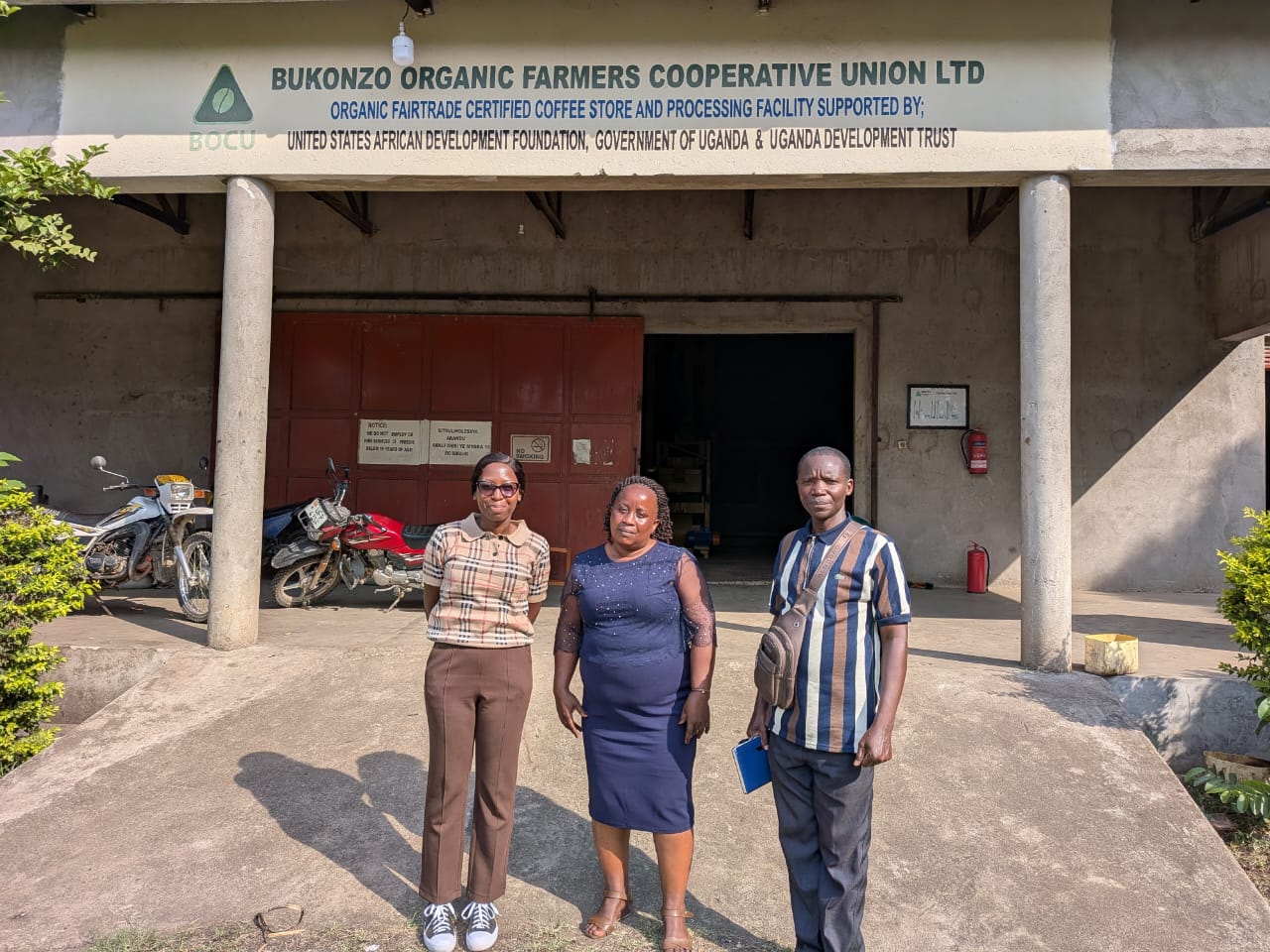
Bukonzo Organic Farmers Cooperative Union (BOCU) is a union of 13 cooperatives with 4,102 farmers. Our current project aims to strengthen organic coffee production through enzyme-based fertiliser production and farmer training, while building resilience and increasing incomes.


Reflections from project visit  

The BOCU team reported that they are currently awaiting results from the Government Analytical Laboratory (GAL) regarding pesticide residue testing. From here, the team will proceed with the next phase of activities involving the enzyme produced in March 2026.  

The enzyme was developed using locally available materials, including watermelons and pineapples. While awaiting the laboratory results, the team piloted the fertiliser without the enzyme component. The fertiliser was applied at the beginning of July, and farmers have already observed positive results, including improved flowering of coffee trees and a reduction in pests and diseases.

Once the laboratory test results are received, BOCU plans to produce and apply fertiliser containing the enzyme between August and December 2026. This period was selected because some farmers will not be harvesting coffee and will therefore be in a better position to apply and monitor the fertiliser treatments on their farms.

To monitor effectiveness, field officers will identify representative farmers at different stages of production, including those with recently stamped coffee, first-harvest coffee and second-harvest coffee. These farmers will participate in the application of the enzyme-based fertiliser, allowing the project team to observe and compare results across different production stages.

The team also highlighted the importance of strengthening peer-to-peer learning among field officers to facilitate knowledge sharing on organic coffee production practices. However, limited funding for fuel remains a challenge, affecting the frequency of these engagements.

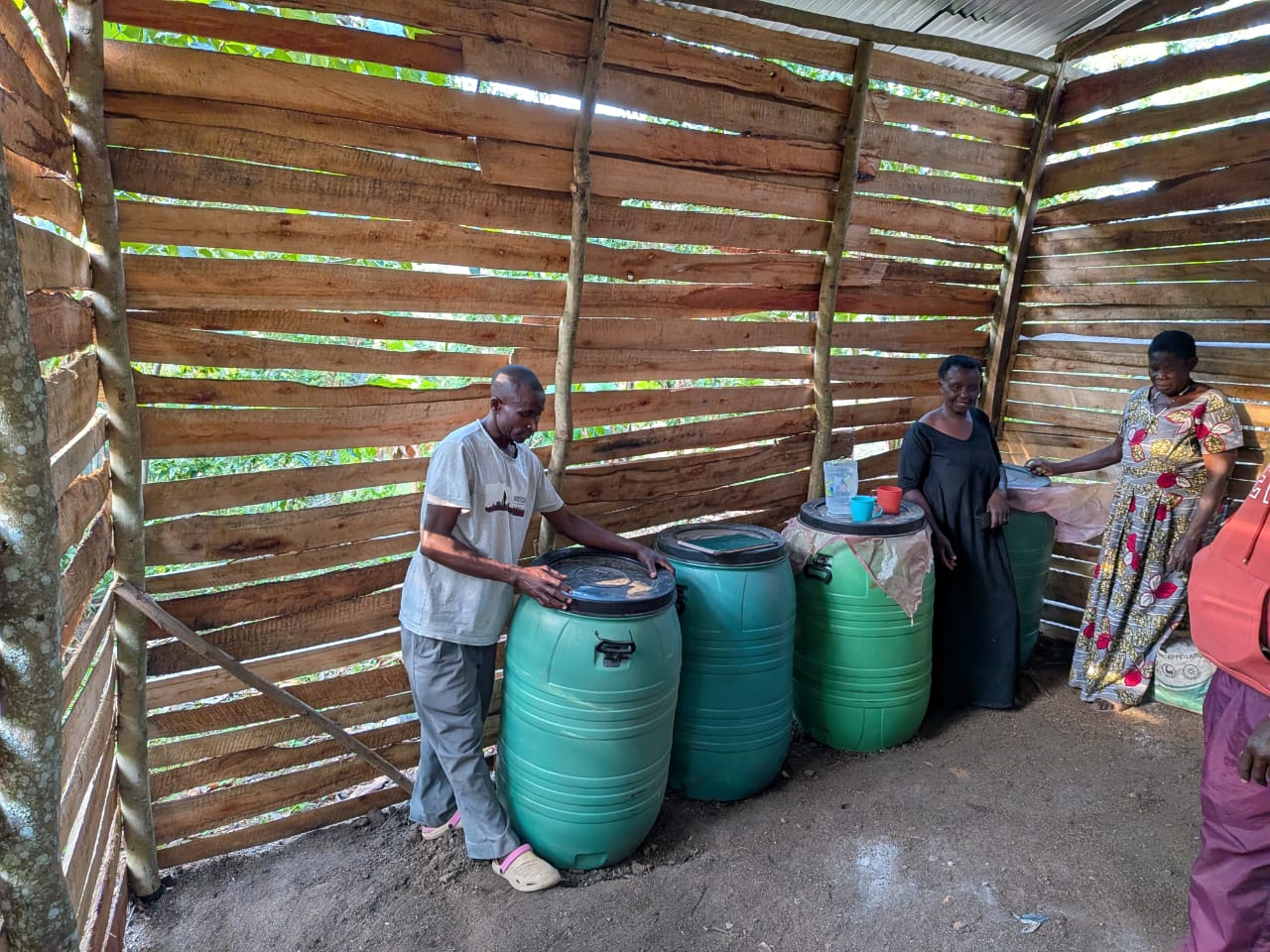
During the visit, I toured the Nyabirongo Production Centre and interacted with five farmers who had been trained in enzyme-based fertiliser production. The farmers expressed appreciation for the training, noting that it enables them to utilise locally available materials rather than relying on pesticides purchased from agro-input shops. 

They also highlighted the value of materials such as wood ash and charcoal dust, which were previously discarded but are now recognised as useful inputs in fertiliser production.

The farmers demonstrated a good understanding of the fertiliser production process and emphasized that the practice is helping them promote healthier farming systems while reducing reliance on chemical pesticides. They also noted the potential benefits of producing food with fewer chemical residues, contributing to improved household health and environmental sustainability.


Image: Neckson Bwambale, Manager (left); Biira Violet, Chairperson (middle) and Suzanna Baluku, Vice Chairperson (right), members of Nyabirongo Farmers Cooperative, inspect the fertilizer that was produced with enzyme which is stored in the water drums.
View Project


Climate-Smart Coffee Farming

By improving coffee productivity, strengthening environmental sustainability, increasing income opportunities and encouraging the adoption of climate-smart practices, this climate-smart coffee farming project will establish more resilient farming systems and help secure the livelihoods of coffee-growing families.

Location: Kabwohe, Uganda

Timeline: August 2026 to January 2028

Participants: 300 farmers

Partners: Banyakole Coffee Services (BCS); SSNUP


Image below: Judith Mugero, Shared Interest Foundation Project Officer, meets with Banyakole Coffee Services associates Isaac Natumanya, Agronomist; Silver Mwerere, Consultant and Lauben Karubaija, General Manager at BCS.

Reflections from project visit

In preparation for the project, several activities were undertaken, including:

  • Identification and contracting of three demonstration plot hosts
  • Recruitment and contracting of the consultant responsible for delivering farmer trainings
  • Engagement of an agronomist who will provide ongoing technical support, monitoring, and advisory services throughout the project period.

The project team also completed the profiling of all 300 participating farmers, resulting in a comprehensive database containing farmer and baseline information. In addition, key project management tools and systems were developed, including monitoring and evaluation tools, project documentation and grant management requirements. The grant agreement was also finalized and signed, providing a solid foundation for project implementation.

During the visit, we discussed the weather forecast component of the project, which is expected to provide farmers with timely climate and weather information to support informed decision-making and promote the adoption of climate-smart agricultural practices.

A project inception meeting was conducted with Lauben Karubaija, General Manager, Isaac Nuwamanya, Agronomist and Silver Mwerere, a Consultant. The meeting provided an opportunity to review the grant agreement, work plan, budget, project objectives, expected outcomes and implementation timelines. This helped ensure a common understanding among all project stakeholders, clarifying roles and responsibilities prior to project commencement.

Overall, the team demonstrated a high level of preparedness and commitment, with the key structures, personnel and systems required for implementation already in place.

View Project

Support our work

We hope you enjoyed reading this project update from our sister charity, Shared Interest Foundation.

Since 2004, thanks to the Foundation's incredible supporters, it has delivered 66 projects in 15 countries, reaching over 13,000 farmers and artisans. Support the Foundation's work today and help to build a fairer world for the future.

If you have any questions about this project, you can share them with a member of our Foundation team via email here.

Donate
By Judith Mugero, Project Officer

Leave a comment

Update cookies preferences